Juglone in Home Gardening: What You Need to Know
By Kristin Ruffin
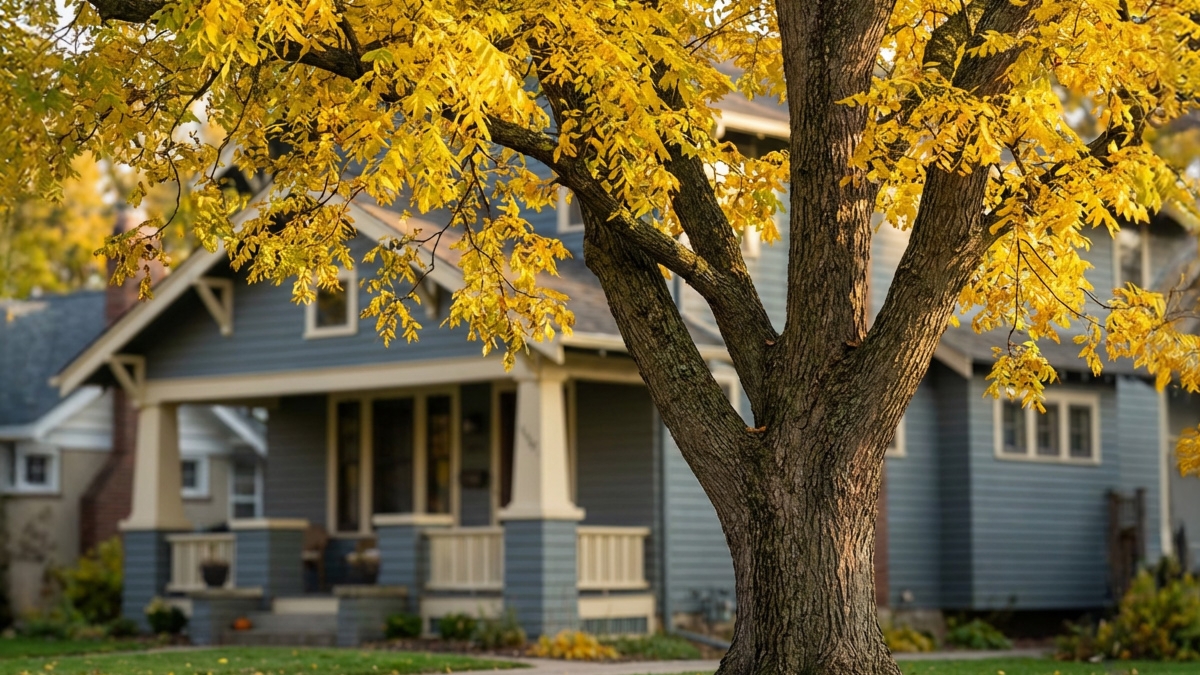
Juglone (pronounced JUG-loan) is a natural plant toxin produced by walnut and hickory trees (especially black walnut) as a defense mechanism. It can inhibit or kill certain other plants growing nearby-a phenomenon gardeners often call “walnut wilt.” Juglone interferes with susceptible plants’ respiration and metabolism, causing wilting, yellowing, stunting, and even death if they grow too close to juglone-producing roots or decaying walnut debris. However, not all plants are affected; many species tolerate juglone and can thrive around walnut trees. By understanding juglone’s effects and taking precautions, home gardeners can successfully grow plants even in the presence of walnut trees.
What Is Juglone and How Is It Released?
Juglone (chemical name 5-hydroxy-1,4-naphthoquinone) is an allelopathic compound produced by walnut family trees and some hickories. Black walnut and butternut contain the highest juglone levels, whereas English walnut and hickory species produce it in smaller amounts. Juglone is present in all parts of these trees—highest in the roots, nut hulls, and buds, but also in the leaves, bark, and wood. It enters the soil through:
- Root exudates: Living roots secrete juglone into surrounding soil.
- Leaf, nut, and wood debris: Fallen leaves, walnut shells/hulls, or twigs release juglone as they decompose.
- Mulch or chips: Fresh walnut woodchips or sawdust can leach juglone if used around sensitive plants.
Juglone is not highly water-soluble and doesn’t travel far in soil. The toxic zone of a mature black walnut typically extends about 50-60 feet from the trunk (roughly the size of its canopy). Juglone persists after a walnut tree is removed because roots continue releasing it as they decay, often for several years.
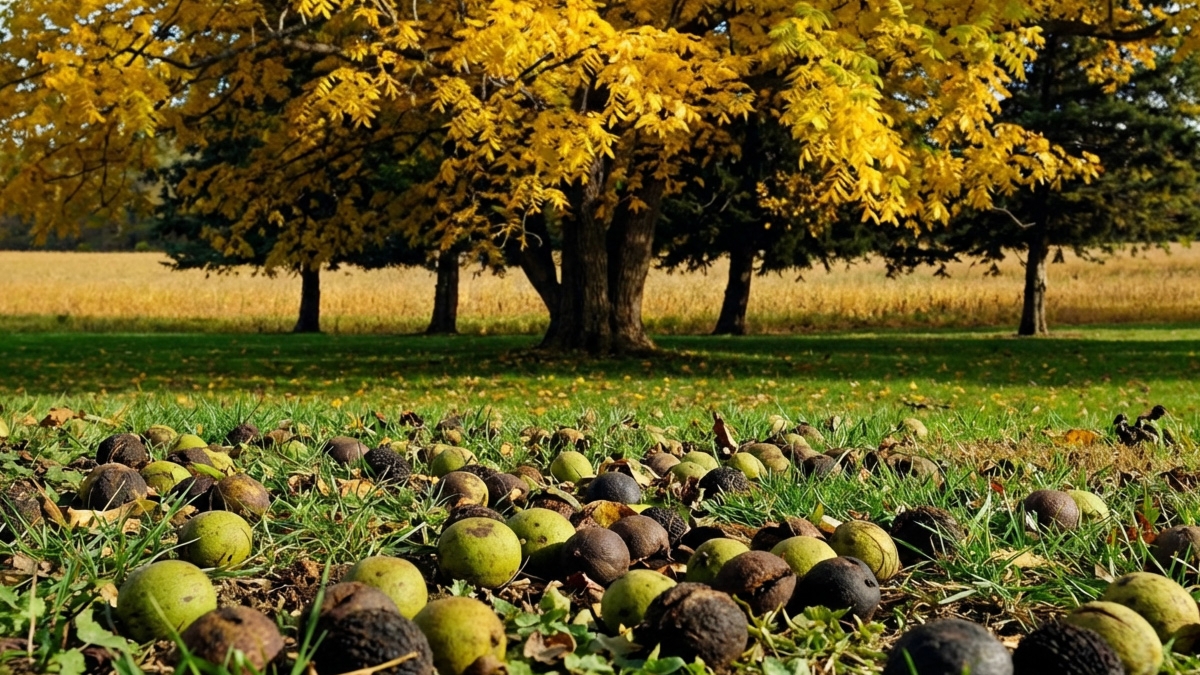 Black walnut balls in grass—fallen walnuts beneath the tree are a visible sign of juglone in the garden.
How Juglone Harms Plants
Juglone acts as a respiration inhibitor, blocking energy production in sensitive plants. Symptoms include:
- Wilting and yellowing of leaves even when soil moisture is adequate.
- Stunted growth and poor flowering or fruiting.
- Sudden death in severe cases.
These symptoms cannot be reversed by watering or fertilizing. Juglone breaks down slowly in poorly aerated soils but faster in well-drained, microbe-rich soils.
Plants Sensitive vs. Resistant to Juglone
Juglone-Sensitive Plants
- Tomato
- Potato
- Eggplant
- Pepper
- Azalea / Rhododendron
- Lilac
- Hydrangea
- Mountain laurel
Juglone-Tolerant Plants
- Corn
- Beans
- Squash & Melon
- Carrot
- Daylily
- Hosta
- Black raspberry
- Maple & Oak trees
Sensitive plants often include tomatoes, potatoes, eggplants, peppers, azaleas, rhododendrons, lilacs, and hydrangeas. Tolerant plants include beans, corn, squash, carrots, daylilies, hostas, and many trees like maples and oaks.
How Home Gardeners Can Avoid Juglone Problems
- Plant outside the toxic zone: Keep sensitive plants beyond the walnut canopy dripline (50–80 ft).
- Use raised beds with barriers: Line the bottom to prevent walnut roots from infiltrating.
- Remove walnut debris: Rake leaves, hulls, and twigs; don’t let them decompose in garden beds.
- Avoid fresh walnut mulch: Compost walnut woodchips for at least 6 months before use.
- Improve soil conditions: Maintain good drainage and organic matter to speed juglone breakdown.
- Choose tolerant plants: Replace sensitive species with juglone-tolerant alternatives near walnut trees.
5 Fruitful Takeaways
- Know your trees: Identify juglone-producing trees (especially black walnut) in your yard before planting.
- Choose wisely: Select juglone-tolerant plants for areas near walnut trees to avoid “walnut wilt.”
- Garden outside the toxic zone: Keep sensitive plants beyond the root zone or canopy dripline of juglone producers.
- Manage debris and mulch: Remove walnut leaves, hulls, and twigs from garden beds, and compost walnut woodchips separately.
- Improve soil health: Use raised beds, maintain good drainage, and add organic matter to help break down juglone and support plant resilience.
You Might Also Like:
Autumn Leaves to Garden Gold: Composting Fall Leaves (and When to Mulch Instead)
Learn how to turn autumn leaves into rich compost, when to use leaves as mulch, and practical tips for healthy, sustainable gardens.
Why Keep Your Fall Leaves? Discover the Hidden Benefits
Learn why leaving fall leaves in your garden supports soil health, wildlife, and fireflies, and how to use leaves for mulch and leaf mold.
Fall Bulb Planting For Beautiful Spring Blooms
A complete guide to planting spring-flowering bulbs in fall for vibrant spring gardens, including tips for all climates, soil preparation, and design ideas.
Understanding USDA Hardiness Zones & Growing Seasons: A Practical, No Nonsense Guide
Understand USDA zones and growing seasons. Learn annual vs perennial basics, microclimates, and smart shopping for variety-specific hardiness.